Skincare by age: what to add in your 20s, 30s, 40s and 50s+
Your skin changes every decade, but the foundations don't: cleanse gently, moisturise, and wear SPF. Here's what's worth adding as you go.
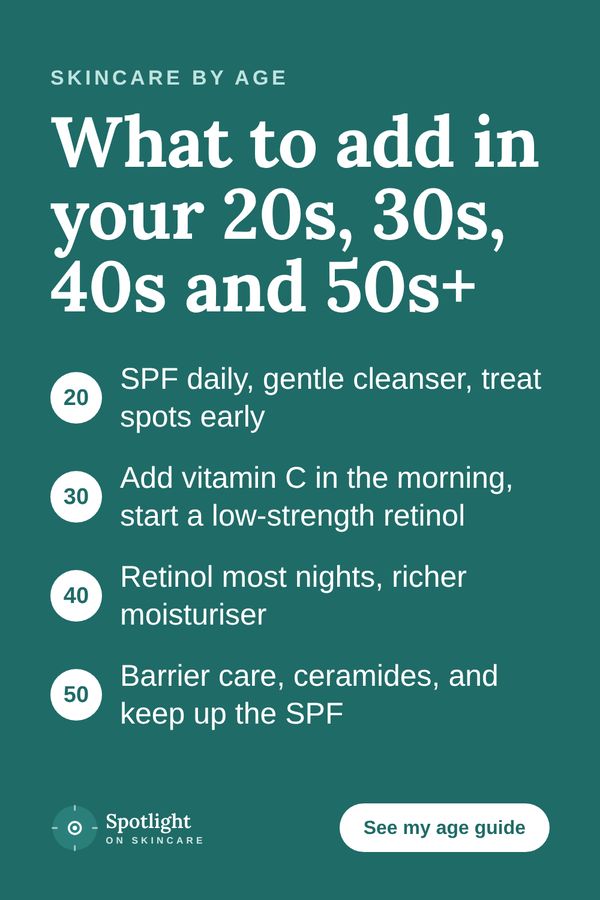
- 20s: SPF daily, gentle cleanser, treat spots early.
- 30s: add vitamin C in the morning and a low-strength retinol at night.
- 40s: retinol most nights, a richer moisturiser.
- 50s+: barrier care, ceramides, and keep up the SPF.
Teens
Keep it simple: a gentle cleanser, a light moisturiser and SPF. For spots, salicylic acid or benzoyl peroxide from the pharmacy. If spots are painful, leave marks or affect confidence, see your GP early; good treatments are available.
Your 20s
This is when daily SPF pays off most. Build the habit now. Use a gentle cleanser and a moisturiser that suits your skin type. If you get spots, niacinamide in the morning and salicylic acid a few evenings a week are good starting points. Don't overdo actives: a calm, healthy skin barrier is the goal.
Your 30s
Collagen production starts to slow, and the first fine lines and uneven tone often appear. Add vitamin C in the morning under SPF, and start a low-strength retinol two nights a week at night. See our retinol guide for how to build up.
Your 40s
Skin often gets drier and changes become more noticeable. If you've been using retinol, you can usually step up the strength or use it most nights. A richer moisturiser with ceramides helps. This is also when many people look at LED masks as a regular add-on.
Your 50s and beyond
Hormonal changes, particularly around the menopause, can make skin thinner, drier and more sensitive. Focus on the barrier: gentle cleansing, ceramides, glycerin and hyaluronic acid, with retinol at a level your skin tolerates. SPF still matters most of all. Get any new or changing marks checked by your GP.
At every age
- SPF 30+ every morning.
- Change one product at a time.
- Sleep, not smoking and limiting alcohol show in your skin as much as any serum.
Not sure what your skin needs?
Six quick questions, and you get a morning and evening routine for your skin type, goals and budget.
Take the free 2-minute assessmentThis guide is general information, not medical advice. If you have a skin condition, are pregnant or breastfeeding, or something isn't improving, speak to a pharmacist, your GP or a dermatologist.