LED face masks: do they work, and is a cheap one worth it?
LED masks went from clinic treatment to Christmas present in a few years. Some are well tested; many cheaper ones don't even say what light they use. Here's what to look for before you spend.
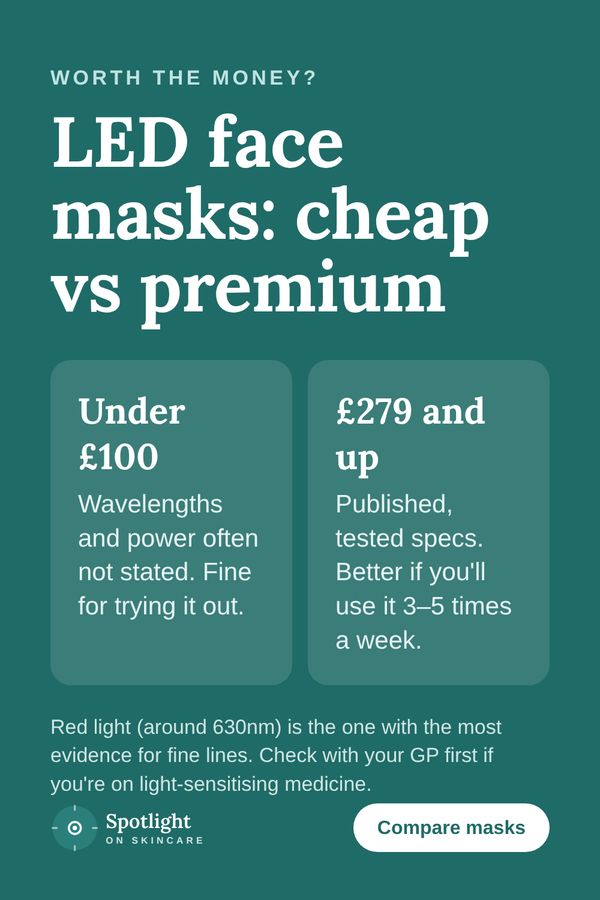
- Red light (around 630 to 660nm) has the most evidence, mainly for fine lines and skin tone.
- Blue light (around 415nm) is used for spots.
- Results take 8 to 12 weeks of use 3 to 5 times a week.
- Budget masks are fine to try; premium ones publish their specs and testing.
What the light does
Red and near-infrared light are thought to help skin cells make energy and support collagen. Small studies show modest improvements in fine lines, texture and redness after regular use. Blue light targets the bacteria involved in spots and can help mild breakouts. LED isn't a laser and doesn't heat or damage the skin, which is why it's comfortable and why results are gradual.
Be wary of big promises. LED is a steady, modest helper, best used alongside good basics: SPF, a retinoid if it suits you, and moisturiser.
Cheap vs premium: what you get
| Under about £100 | From about £279 | |
|---|---|---|
| Wavelength stated? | Often not, or vague | Yes, published |
| Power / dose | Rarely given | Usually given, often tested |
| Fit | Rigid, gaps at the edges | Flexible or shaped to the face |
| Safety marks | Check carefully | UKCA/CE, often medical-device class |
| Best for | Trying LED out | Using it 3 to 5 times a week for years |
If you buy a budget mask, look for a listed wavelength (for example 630nm), a timer, and proper eye protection. If the listing won't tell you the wavelength, skip it.
One of the best-known premium masks: flexible silicone, red and near-infrared.
How: 10 minutes, 3 to 5 times a week.
A flexible mask from a brand with a long clinical background.
How: as directed, usually 10 minutes several times a week.
How to use an LED mask
- Clean, dry skin with no thick creams or SPF underneath.
- Use it for the time the maker says, usually 10 minutes.
- Be consistent: 3 to 5 times a week for at least 8 weeks before you judge it.
- Then carry on with your usual serums and moisturiser.
Not sure what your skin needs?
Six quick questions, and you get a morning and evening routine for your skin type, goals and budget.
Take the free 2-minute assessmentThis guide is general information, not medical advice. If you have a skin condition, are pregnant or breastfeeding, or something isn't improving, speak to a pharmacist, your GP or a dermatologist.