Rosacea and redness: a calm routine and the triggers to avoid
If your cheeks flush easily, sting with new products or stay red, a simpler and gentler routine usually helps more than adding more. Here's what to use, what to avoid and when to get help.
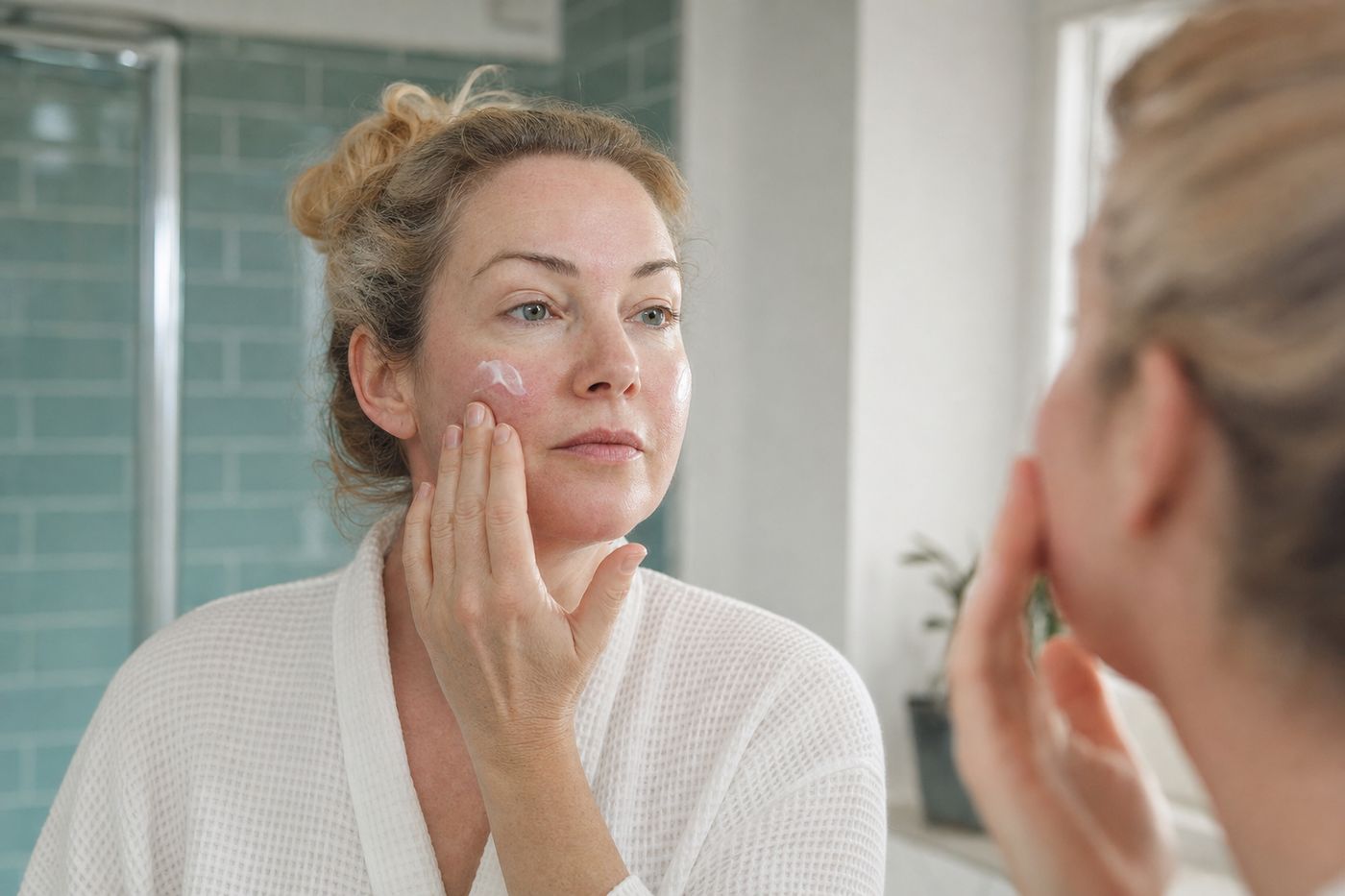
- Keep it simple: gentle cleanser, soothing moisturiser, SPF 30+.
- Know your triggers: heat, sunlight, alcohol, spicy food, hot drinks and stress are common ones.
- Skip: scrubs, strong acids, alcohol-heavy toners and fragrance.
- See your GP if redness is persistent, with spots, or affects your eyes.
What rosacea is
Rosacea is a long-term skin condition that mainly affects the face, causing flushing, redness and sometimes spots and visible blood vessels. It tends to come and go in flare-ups. It can't be cured, but treatment and avoiding triggers can control it well.
Common triggers
The NHS lists triggers including alcohol, spicy food, hot drinks, sunlight, hot or cold temperatures, strenuous exercise and stress. Keeping a simple diary for a few weeks can help you spot yours.
A gentle routine
A mild, fragrance-free cleanser.
How: lukewarm water, pat dry, morning and evening.
A short-ingredient-list moisturiser for reactive skin.
How: morning and evening.
High protection in a light fluid.
How: every morning, all year.
Once your skin is calm, azelaic acid or a low-strength niacinamide can help with redness. Add one at a time and stop if things flare.
What to avoid
- Scrubs, face brushes and strong exfoliating acids.
- Toners and products high in alcohol, menthol, eucalyptus or fragrance.
- Very hot water, saunas and steaming your face.
- Starting several new products at once.
Questions people ask
What triggers rosacea?
Common triggers include alcohol, spicy food, hot drinks, sunlight, hot or cold temperatures, strenuous exercise and stress.
What skincare is best for rosacea?
A gentle cleanser, a fragrance-free soothing moisturiser and daily SPF 30 or higher. Avoid scrubs and strong acids.
Should I see a GP about rosacea?
Yes if redness persists, you have spots, or your eyes are affected. Prescription treatments can help.
Sources and further reading
Not sure what your skin needs?
Six quick questions, and you get a morning and evening routine for your skin type, goals and budget.
Take the free 2-minute assessmentAbout Spotlight On Skincare: an independent UK skincare advice site. Our guides are researched from NHS and published evidence, written in plain English, and checked for safety warnings. We are not doctors. This guide is general information, not medical advice. If you have a skin condition, are pregnant or breastfeeding, or something isn't improving, speak to a pharmacist, your GP or a dermatologist.